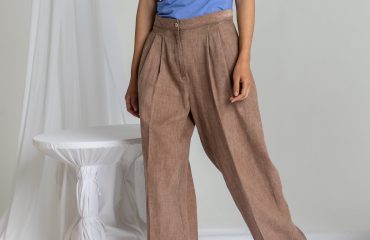

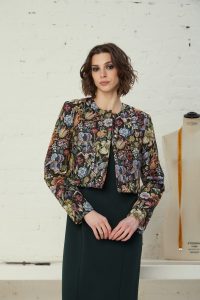

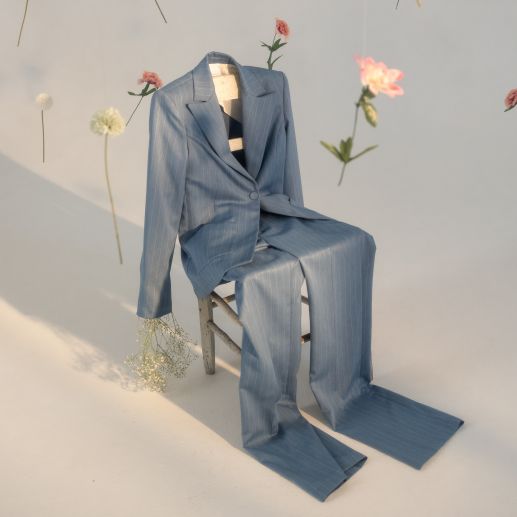
When you wear an Opificio Modenese piece, what you see is the final result. But behind every dress, every skirt, every blouse in the SS26 collection lies a long and precise journey — made of choices, tests, adjustments and expertise built over more than thirty years. Understanding how a Made in Italy garment is born changes the way you look at it, and the way you wear it.
How a Made in Italy garment is born: it all starts with an idea and research
Before drawing a single garment, there is study. The SS26 collection — inspired by the Japanese cherry blossom, the Sakura — begins with a style research phase that precedes any technical decision. Trends are observed, seasonal colours are explored, the right suggestions are sought. Only after this phase does the idea for each individual garment take shape.
It is a creative moment, but practical considerations already enter at this stage: what kind of woman will wear this piece? On what occasion? How should it fall on the body?
Choosing the fabric: a decisive step
Once the idea is defined, choosing the fabric is one of the most important steps in creating a Made in Italy garment. It is not a secondary detail: the fabric determines everything else. The drape, the comfort, the colour rendition, the type of stitching possible. For this reason, the selection is careful and considered, garment by garment.
The SS26 collection brings together fabrics with very different characteristics. Sensitive® Fabrics — technical, breathable, crease-resistant, produced with low environmental impact processes. The jacquard, produced in France, is a fabric in which the design is born directly from the interlacing of threads in the weave: it is not a print applied on the surface, but a pattern that is part of the very structure of the fabric. The result is a three-dimensional effect, with depth and relief that a flat print cannot replicate. For the other garments, the selection focuses on fluid and lightweight fabrics, chosen according to the silhouette and the type of construction required.
Pattern-maker and seamstresses: the artisan heart of the Made in Italy garment
This is where the real technical phase begins. The pattern-maker studies proportions, cutting lines and volumes. But they do not work alone: the seamstresses are involved from the very start, before the first prototype is even made.
Why? Because certain details can only be understood by touching the fabric. Based on the chosen material, decisions are made about finishing, threads to use and types of stitching. The seamstresses carry out sewing tests, check how the fabric responds, and verify that the working sequences are correct. It is a way of thinking about the garment from every angle before making it.
This approach has a precise logic: investing more time in design to reduce the number of prototypes needed. Less material waste, fewer production errors, higher quality in the final result.
The prototype: when the garment takes shape for the first time
The moment arrives when the garment exists for the first time. The prototype is mounted on the mannequin, assessed, and worn for the fitting. This is where issues emerge that no drawing or software can fully predict: how the fabric behaves in movement, whether the proportions are right, whether the fit works for different body types.
Then comes the defect-correction phase: the garment is analysed in every detail, corrections are fed back into the pattern, and everything is verified before moving to production. Only when the garment passes this phase can it be considered ready.
Why this process shows in the finished garment
All this work — which remains invisible to the person wearing the garment — shows in the result. It shows in the way a skirt falls. In the way a drape sits on the body without needing to be constantly adjusted. In the fact that a Sensitive® dress comes back perfectly after a journey, hung up for a few hours.
It is not magic. It is the result of a process designed to work, with the right expertise and the time needed to do it well.
Discover the pieces from the Spring/Summer 2026 collection and, if you want to explore how to build your wardrobe with Made in Italy pieces, read our guide on how to refresh your wardrobe with Opificio Modenese. To find out more about Sensitive® fabric and its characteristics, visit the dedicated page on the Opificio Modenese website.